Thursday, 18 August 2011

Post it war in Paris

The post-it war in Paris is raging. In the corporate world of offices, it started with an employee who leashed her creativity and made a video game hero on her window with post-it notes. The Bank across could not stay idle and riposted with another video game hero. And it is all over Paris, its suburbs and going beyond!
It has been going for a few month.
Who said one cannot break the chains of monotony with whatever is available around?

Post-it war link to more photos

Wednesday, 17 August 2011

Moleskine Notebook exhibition in Paris


"Moleskina Contamina" interprétation de l'artiste portugaise Joana Vasconcelos 

At the Bon Marché, in Paris, Moleskine is presenting an exhibition: artists and their notebook. An inspiration in creating within a small scale, sketches and artwork.
Moleskine has a vested interest in presenting its product beyond the iron curtain of intimate, personal space. It is also promoting an important form of art: sketching, playing, changing the tool into beauty.
With a view on what artists do with their notebook, it gives also a closer look to to a work in progress, to spontaneity in the process. Exhibition until the 25th of August 2011

Tuesday, 16 August 2011

Goldbeater, a lost tradition

http://youtu.be/gkLi1px1vdo


Goldbeater for five generations, Dauvet is the last one in France. Competition comes fromt he far east, with a few goldbeater makers of the fine thin sheet of gold. But Mr Dauvet has a feeling of a unique art, transmitted to him by his parents, that he holds in his hands and wonders if he will be able to pass it on to his son. A knowhow with tools and machines that seem like a lost tradition, a passion against all modern waves, a pride of production.
Dauvet has on his trophy his gold leaves for the Invalides'dome, the statue of liberty's flame and many others.

Dauvet website link

Sunday, 14 August 2011

Creative Spaces - Beirut


Creative Spaces in Beirut is an outstanding effort from a Lebanese graduate, Sarah Hermez, who decided to contribute in lives of others who could not go as far as she did.
Coming back home after studies at the New School, Parsons in New York, and a few trips in emerging countries such as India and Cambodia, she established herself in Beirut and wanted to share her knowledge.
Against all odds, she took her professor's offer, Ms Caroline Shlala-Simonelli, a lebanese american, expert in fashion making. She looked for a place in Lebanon, gathered students, fundraised all of the above. And it all started.
A two month course in learning: from the very beginning in finding ideas, looking for creativity, until the end product: a exhibition on the 17 until the 19 th of August 2011 in their atelier.
With the precious help of Ms Caroline, the whole process is spreading quality, precise tools and knowledge. It is about sharing a passion.

if you're in Lebanon do not miss the event!

creative space's website link


Saturday, 13 August 2011

Jassim al Nashmi and Pete Goché at Iowa State University

The opportunity of creativity given to a Kuwaiti Student at Iowa State University: Jassim al Nashmi has the incredible opportunity to travel outside his country, study abroad, learn in the best of the situations. He is at Iowa State University in the USA and wanted to work with an architecture professor and practising architect, Pete Gouché. 
The story goes as follow: 
"I decided to do an independent study with a professor I liked, but did not know what to study exactly. He suggested a course he had designed called Ritual Stations: simply put, you are to pick a domestic ritual that you practice by yourself or with your family and explore it, the end result is the product of this exploration, which can be anything. I chose Muslim prayer, so I asked friends and family what prayer means to them, what kind of environment they imagine would be most comfortable to pray in, what they think about when they pray.


I decided to design a space that would be the manifestation of what I had researched. This space was to be portable, because one can pray virtually anywhere, it was to be easy to construct, because it is for anyone to use, and it was to create a space in any room of any building feel transcendental and peaceful. With the materials and techniques that were available, it seemed like a praying mat was necessary, but also something that enclosed the space but felt like there were no real boundaries, which is what prayer feels like. Using traditional Islamic ornamentation, a permeable partition wall was fabricated that serves as a divider of space; playing with light & shadow and emanating a divine aura."


For a muslim arab student, the subject is thrilling :"ritual stations". Society in Kuwait is still attached to its rituals as a matrix of identity. Jassem picks Muslim prayer, uses the traditional geometric pattern so widely seen on mosques and buildings in the Arab world, and opts for a mat for the use of three adult males as he says "so my dad would pray in front of us and the 3 of us (my 2 brothers and I) would pray side by side."
This all looks like a repetition of what is traditionally available. 
But Jassem goes a bit further in his creative process and decides to twist a bit the traditions: he thinks about portability, about simplicity, about availability. He wants to create a place of prayer without clutter and without external input. 


It is a good trial for a young student in his capacity to encounter creativity. His challenge was surely to talk about a subject that is generally seen in the US as a symbol of terrorism. But did he really push himself to the limits of creativity?
What did his professor, Pete Gouché, consider for the project's evaluation?
Jassem says: "he was interested in our perceptions of our rituals and he wanted to help us explore them, he is a very humble man so he sees a lot that other professors don't see; he actually learns from his students. " 
The student must have learned the necessity to learn from others, beside professors, as the true way to connect with others.


The real question here is whether the student, with his exposure, could come back home and continue to explore the matter with full thrust. Will he be able to push his environment's limits and persist in creativity no matter what his peers' reactions are?
Will he think of integration rather than segregation? Will he feel at home with the whole world rather than an identification to country or nationality?

It is Kuwait greatest asset, beside Oil: young students learning outside and coming back home. It brings in change a step at a time, silently, slowly, without much violent or repression. 


Pete Gouché's website link


Wednesday, 3 August 2011

Modern Architecture for a Church in Munich


Herz Jesu Church in Munich is of interest in modern architecture,  a prayer hall with a combination of space, light, steel, glass, wood and the multiple levels of christian symbols.
Allmann Sattler Wappner Architects won the competition for the Church and they used all contemporary tools to bring into life a place for prayer with a facade of glass that opens up entirely as doors to welcome all. The glass throughout the building is used in different grades of transparency to opacity closer to the altar as a degrees of light in the church. With simplicity in its interior and exterior, light becomes the only revolving effect.
With only a few constraints of use, the building is an example of how prayer places can adapt to the needs of the moments, reflect the era when it is built, remove the pretense of historic gimmicks.
The same location has had two previous churches that were burn down, one by war, the other by accident. Hopefully it will survive a few generation to carry the architectural message through.


link to the architects' web site

Saturday, 30 July 2011

Theo Jansen, kinetic sculptor


BBC report


Kinetic sculptor, using wind, motion, pvc, wings, Theo Jansen uses his creative power, his combining skills to make animal like creatures. Majestic.
Hours of labors, trial and error, he does what it takes to keep his work alive.
Arabs of talent, use your time to create!

Friday, 29 July 2011

Deconstructed Stairways to heaven - Vincent Dubourg


The '3 Storey Staircase' private commission by Vincent Dubourg,
represented at Carpenters Workshop Gallery
by a to-scale maquette. Photograph by David Brook
Wallpaper magazine displayed a photo of this staircase designed by the artist Vincent Dubourg, commissioned for a home in London by an Arab lady. As a discreet art patron, no name appears in the article. Vincent Dubourg talks about his experience in the project: how he was set free from guidelines and could work as an artist to produce the stairways as he wished. Sprouting from the wooden floor and reaching to the top as an organic element it looks like the staircase has lived there before the house was built. Although the tree feeling is quite vivid, the material used as steel and metal gives a dissonance in the biological alive sensation; but pulls out a futuristic and robotic effect. Impressive.


Wallpaper article (link)
Vincent Dubourg website (link)

Thursday, 28 July 2011

Edimburgh jazz festival

The beauty of jazz festival or any other festival style is the choice: on a given day, let's say wednesday 27th july 2011, you're in Edinburgh and you plan to do what the locals do.
Angela King, a jazz singer (link)
Hidden orchestra / red snapper (link)
Hypnotic brass ensemble (link)
some others scattered in town.
The choice was to listen to Evan Christopher, clarinet player who knows about history of jazz. He plays "Django a la creole" with guitarists David Blenkhorn and Dave Kelbie, and bassist Sebastien Girardot. He talks about Django  Reinhardt and how the mix of clarinet, manouch, gypsy and creole music in the jazz tunes started when Django joined the Ellington band. The concert was light, pleasant and entertaining. With the sound of his clarinet, Christopher creates a jazzy mood, soothing! Nothing like live performance.


Monday, 25 July 2011

Lucien Freud passed away

autoportrait

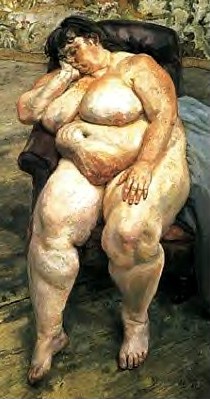
Lucien freud passed away at the age of 88 and left many of his works to the Arts. In the contemporary world of concepts, installations, abstract, Freud painted reality in human flesh and bodies; he took the time to express himself to the fullest. Not looking at the plastic superficial perception of human bodies, he said:" I paint what I see not what you want me to see"; searching for a truth beyond the explicit.


Wednesday, 20 July 2011

The giant bookstore "Borders" shuts down


With store in the UAE or Oman, Borders shutting down by the end of september will have its own effect in the Arab world.
For reasons of profitability and return on investment, the US giant bookstore that had in stock more than thousands of books in each of its 400 stores, has to close down. The shift of clients behavior towards reading is a silent revolution, but predictability is another unknown factor: will the small neighbourhood bookstore resurface? will the internet take over any buying of books? will reading on electronic devises wipe out the paper format forever?
Fnac (another giant in France) is rethinking its strategy to keep some of its market shares. They plan to concentrate their efforts on the customer rather than the product, which could make the event of visiting the store an experience by itself.
Will Amazon be our only source of books?
In the Arab world, before contemplating a bookstore's financial results, we still have to work on the books productions and accessibility: censorship and repression on ideas and thoughts are slowly cracking up through different countries, but it has barely gone beyond twitter and facebook. Reading or writing books require a deeper and longer thought process than the 140 symbols message.

Friday, 8 July 2011

Souad Massi at the Democratic Republic of Music in Beirut


Democratic Republic of Music is the new concert/bar/restaurant in Hamra. They were looking for the perfect sound; so they tailored everything around it. "We built a box in a box with special materials so that the sound is crystal clear with minimum reverberation. DRM is a concert hall that was conceived from this perspective: the perspective of music producers and musicians." they say in their website.
And they have added the experience: food, drinks, service, friendliness.

Tonight Souad Massi on the microphone. The algerian singer shared her passion with her voice, with her heart.
A great performance in a magical place.


Democratic Republic of Music link

Friday, 3 June 2011

Can you do the Cans campaign?


The art of can has started in 2009 in other parts of the world, it arrived to Kuwait and the deadline is august 2011 to submit your art work with redbull cans. Billboards are everywhere (though quite unclear)
Recycling redbull's cans and showing creativity and talent; what a noble cause!
Let's see what the arabs can produce...

link to the red bull site

Sunday, 29 May 2011

Jim Al Khalili - the House of Wisdom

The House of Wisdom, How Arabic Science saved ancient knowledge and gave us the renaissance by Jim al Khalili.
The author is a professor at the University of Surrey, theoretical physicist and broadcaster. With interests in the development of body quantum scattering methods, al Khalili has an added quality of communicator through Tv shows, radio talks etc.
The Arabs contribution to science has been widely researched and published, but "the house of Wisdom" must be brought in with another angle and an in depth vision.


Thursday, 5 May 2011

Meditative calligraphy workshop in Kuwait


Fareed Abdal, Kuwaiti architect and artist, is also known as a great teacher with his students at the Architecture departement at Kuwait University. He opened his knowledge again in a three days workshop on arabic meditative calligraphy at the Dar al Athar al Islamiyah.

He said: "three days of workshop is nothing, but a small window into a craft that can be expanded to an art." He started with the simple basic rules of arabic calligraphy, he engaged with the students in asking them to create their own tool for the next session, he went beyond the exactitude of script and letter formation. He combined his practice to allow thinking about space, time, the white around the black ink. He then opened doors of exploration in the arts of arabic calligraphy and used Sufi and other traditional schools of calligraphy to bring in the tradition while pushing it into a contemporary art.
He continuously spread the productions on the floor outside the room to allow another persective and pull out reactions from the students.

If Fareed Abdal is doing another "meditative calligraphy" workshop, make sure to sign up: it is definitely worth all your efforts