Are you joining a few thousands to commit and quit Facebook on the 31th of May 2010? It is nothing compared to the millions around the world who enjoy being hooked on Facebook.
The interesting part is the necessity to unhook, to unplug, to feel less exposed.
Where is the threat: all the information available on each and all users. Some will say: "I have nothing to hide". Other will say: "I will only share what I want". Some will refuse to comment, some will justify a new way of life and communicating.
There is an undergoing revolution in the virtual world impacting our realities.
Have we really explored our own image in who we are and how we would like to portray ourselves to the general public? Who is using the information and to what purpose?
Privacy and personal data has been a fight under the name of civil liberties and necessity to contain information abuse. Facebook pulverizes any notion of the sort. Technologies today are capable of retrieving data and information without your knowledge.
It also allows a possibility of looking into other's thoughts, contacts, friends, just as stalkers do. Our unconscious desire to stalk goes beyond the morality of sharing. So when an exhibitionist wants to show all he has, he doesn't need to go around the bush, he can just share some photos on Facebook, and all the "voyeurs" can see without leaving their screen.
Facebook is a major success with the number hooked on it. It has filled a vacuum of connection beyond the material, physical world.
But it remains a tool at the service of the users. What are you doing through Facebook?
http://www.quitfacebookday.com/
Monday, 31 May 2010


Sunday, 30 May 2010
Ghada Waked, art and culture
.

Ghada Waked teaches photography at the ALBA (Lebanese Academy of Fine Arts) in Lebanon, she talked on the essence of art and culture and how today it is perceived
"Culture has taken the cover of the mundane. The mundane is hunting down culture. Economics are hunting down the social. In all of that, it has become a matter of price tag, sale price, and who's going to own what. The curator has a new dimension in the culture of arts. He has a role of flirting with investors and artists flirt with the curator.
But no one is ready to walk on the wild side of art and life. It has become a restricted closed circle.
Art around us seems to have lost its aura on reaching to a wider public, in touching souls.
We have in Lebanon good programs and festivals on visual arts, video arts: the Alba Film Festival every year, Ashkal Alwan... with very good speakers and good debates. But it has not moved the masses."
A teacher is closer to the younger talent, closer to their creativity and production. A teacher will help unravel and open eyes and it can take years to materialize. But it is of great importance to keep the horizon stretched out and allow young artists to think on how to shake the unbearable layer of convenience.
Sunday, 23 May 2010
Art therapy linked to improvement in asthmatic children
Researchers in the medical field have explored a link between the effect of art therapy and children with Asthma. The research was done with a group of kids, documented, measured, studied, in a time spam in comparison with a group of kids who did not receive any art therapy.
They published their results: It works... it makes a difference and it improves the kids on worry, anxiety, communication...
On one hand: Where are we, in the Arab World, to improve health issues in Children beside the heavy medication and Hospital / Doctors relationship?
On the other hand: Where are our researchers exploring such areas?
Link to Journal of Allergy and Clinical Immunology
link to reuters report
They published their results: It works... it makes a difference and it improves the kids on worry, anxiety, communication...
On one hand: Where are we, in the Arab World, to improve health issues in Children beside the heavy medication and Hospital / Doctors relationship?
On the other hand: Where are our researchers exploring such areas?
Link to Journal of Allergy and Clinical Immunology
link to reuters report
Friday, 21 May 2010
Mahmud Obaidi at Sultan Gallery

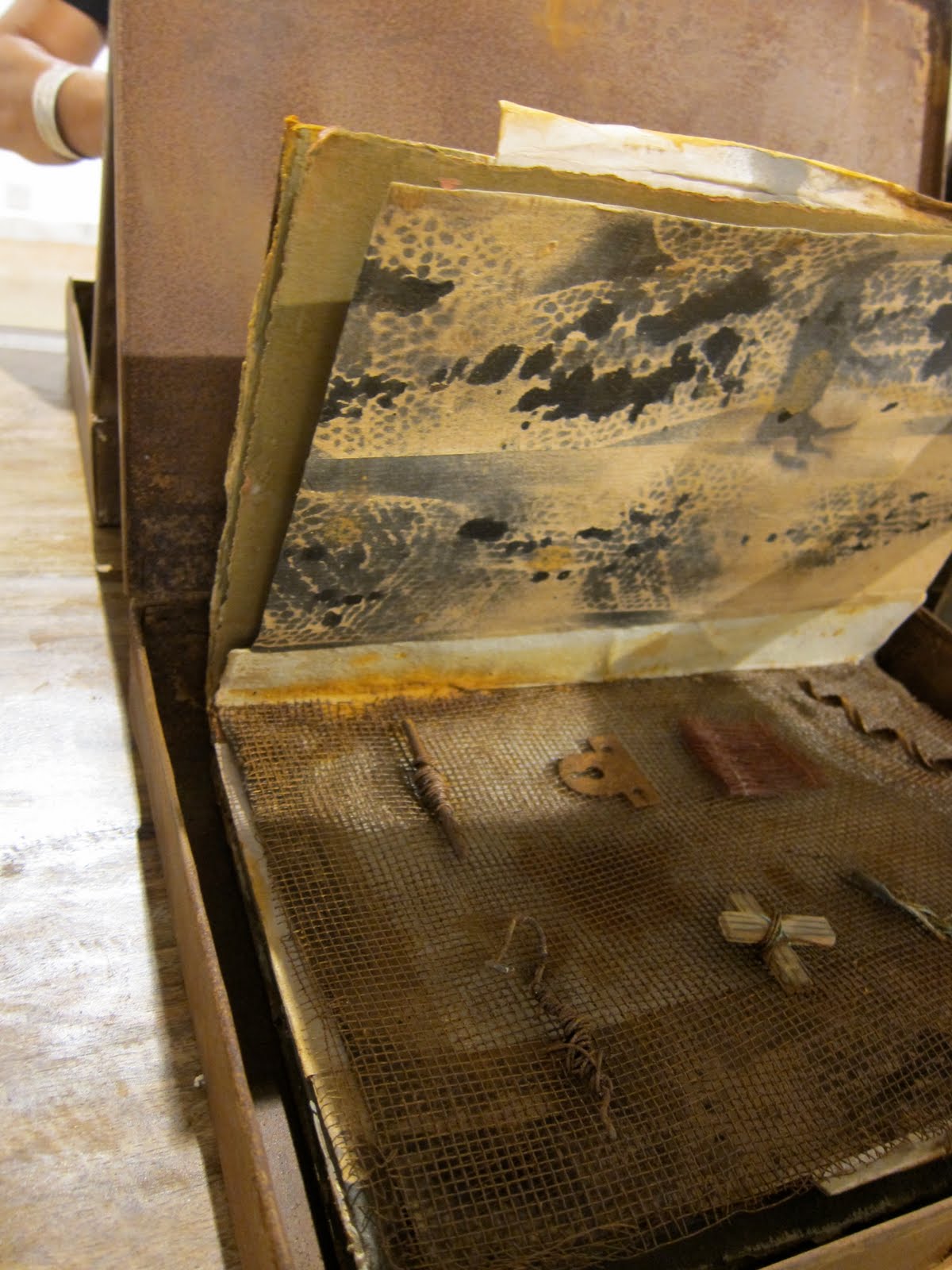

It is better not to use the word Terrorist anywhere near anyone, they might think you actually are one of them...
Mahmud Obaidi, an iraqi-canadian, invited to attend the opening for his exhibition in Kuwait, could not get his entry visa on time for the event. Too bad for those who were waiting for an explanation.
Although quite harsh and explicit art about homes in boxes, Obaidi entitled his exhibition in New York: "how not to look like a terrorist".
He puts on canvas elements of war, guns, tanks, corpses, signs of fragmented entities, inflated beings and words. It is about controversial art of expression to unleash what is said on the Middle East at all times. With the profusion of news 24h a day, it looks real. Then comes the argument: do we want an art that enhances our realities or just shows us the crude side of our unease? Do we want pretty or can we bear our own horrors?
Obaidi digs deep in expressing. He pulls from afar images to talk about: what is a home in the arab world? what do exiled arabs carry with them to find a living? what is imprinted in the collective subconscious? how are arabs perceived in the west?
He finds aesthetics to combine the several possibilities, he plays with organic material, adds hair to the collage. He made books in metal and paper with sand and dirt. He added wood and wire to give a sense of belonging. It must be an identity crisis. But isn't the whole arab world trying to forclose on any questioning beyond the post-colonialism or the oil era?
It is a an audacious exhibition and it's worth noting that the artist doesn't help anyone escape in lala land but rather pushes beyond the comfort zone.
(Until the 3rd of June)
Sultan gallery link
Wednesday, 19 May 2010
Gerard Avidissian at Dar al Funoon


His study on women wearing all sorts of outfits and jewelry is decorative and colorful, even if he tried to add some depth of space. He portrayed women dancing or others just posing as if he was intrigued by the looks and the stiffness. Is he wishing to explore a feminine side to life that he has not yet reached?
Dar al Funoon has accustomed its viewers to a more daring approach to contemporary art and works with a finer edge than this. But to every work of art, there must be a buyer somewhere.
Tuesday, 4 May 2010
Sarah al Hamad: "cardamom and lime, recipes from the Arabian Gulf"

A cook book from the Arabian Gulf
In Kuwait, people are divided into two categories: Those who eat out of a kitchen in a home and those who consider local food a mystery. The mystery is where to find it, how to cook it, and how to make it taste like it should.
Sarah al Hamad has ventured to nail down that mystery, transform it into a simple recipe book and unravel the enigma. She admits that during her research she went for months; from family to friends to kitchens to cooks to reveal the mystery of it all: “ The nature of Gulf cuisine; how varied and individual it is and that the proof is in the spicing – how much is used and which spices with which foods – is where the difference lies.” more....
read the article in BAZAAR MAGAZINE:
Friday, 23 April 2010
Budrus - Non violent mouvement in Palestine
Budrus is a documentary on a non-violent mouvement in Palestine, showing the persistance of some activists from the Palestinian and the Israeli side.
Non violence was advocated many years ago, some do it silently, some succeed, some other fail. But today in the Palestinian-Israeli conflict, press coverage is all about violence. On the Israeli side, it is common to talk about threats from terrorists with the need to protect and for security to prevail. On the Palestinian side, it is usually about victims, rights removed, agony and pain. From an arab perspective, it is about the unsolved conflict that has no end and full of humiliation which dragged many years of suffering. From the Western perspective, it is about whose media talks louder and present their point of view. Violence every where, from all images and talks.
Budrus is a village in Palestine that stood non-violently against the Wall in 2004. With the help of conviction and "thinking outside the box", men and women from all sides got together and made a difference.
Julia Bacha is the director of this documentary following the major steps in the mouvement. She talks about "peace fighting for peace" and the need of freedom. Media doesn't cover much of this, but a documentary would allow a different vision on the subject. The film got screenings and awards in the Arab world and recently in New York at the Tribeca film festival 2010. It is worth seeing if ever in your neighborhood.
Budrus official website
Little white lies blog: review
Wednesday, 21 April 2010
Houda Kassatly - art on trucks


At last, a book on art painted by truckers on their most precious possession, their vehicles.
Houda Kassatly, an anthropologue and photographer, did a research and published it at "Editions Terre du Liban", with the title in French: " Les camions peints au Liban d'aujourd'hui".
Big or small, four or twelve wheelers, heavy duty or light weight, trucks are decorated with first a need of aesthetics, with colors and designs. Once elegance and grace is in place, the truck needs full protection from evil eye or any superstitious malefic power. After that poetry, sayings or slogan or even jokes can be added to reveal the driver's philosophy and entertain other cars passing by.
It is an art and it says a lot on masses and proletarian expression of culture and beauty.
(photo by Houda Kassatly from her book)
Tuesday, 20 April 2010
Ashkal Alwan - Homeworks 5
Ashkal Alwan is "platform for the creation and exchange of artistic practices. As a non-profit, the association is committed to education, production, support and circulation of creative and intellectual endeavors rooted in an engagement with civil society."
Based in Beirut, they will start their yearly program: Homeworks on the 21st of April to continue until the 1st of May. Their program is rich and attractive.
If in Beirut, do pick a venue and take the time to see or watch or hear, it looks promising.
Ashkal Alwan program
Ashkal Alwan site
Based in Beirut, they will start their yearly program: Homeworks on the 21st of April to continue until the 1st of May. Their program is rich and attractive.
If in Beirut, do pick a venue and take the time to see or watch or hear, it looks promising.
Ashkal Alwan program
Ashkal Alwan site
Sunday, 18 April 2010
Ancient Egypt art - discovery of a royal scribe tomb

A tomb of an ancient royal scribe has been recently unearthed in Tell al Maskhuta in the province of Ismaelia, Egypt . This intricately decorated tomb belonged to Ken-Amun in charge of royal records during the 19th Dynasty (1315-1201 BC).
Beside their unparalleled monumental art, scattered in open air from pyramides to statues to temples, ancient Egypt has left treasures still today in the realm of discoveries and exploration. Mumies have been opened to be studied and then shoved in museums. Scrolls and tools have been neatly rearranged in display boxes. Frescoes, bas relief, stones are there to be seen. What a gift from the Pharaohs and their civilizations!
The question will remain facing the mass tourism tendencies on how will anything be preserved for the afterlife of civilizations or even the future generations to learn harmony and aesthetics ?
Monday, 12 April 2010
Photo Romance - Rabih Mroue, Lina Saneh

Rabih Mroue and Lina Saneh are showing their theatre / video / performance: "Photo Romance" in Paris at the Parc de la Villette until 24th of April 2010. They have good reviews in medias in France and internationally on their artistic activities. Their subject in this recent work is about identity of a man and a woman in search of answers about the major fault lines of conflict and existence in Lebanon: religion, ideas, politics, masculin virility, women's role, freedom, reality...
Will you be in Paris to see this performance?
It might take a long time before any of this can be shown in the Gulf. It might be too tricky or too adventurous.
Thursday, 8 April 2010
Used books store in Kuwait
It seems to have been around for quite a while and bloggers stumble upon it and make a buzz from time to time. But it is incredible: A Second Hand - Used Books Store in Kuwait!
And they buy your books or sell you some others and will rebuy them again from you within a period of time.
In a country where books are rare and so scrutinized, book shops are to be counted on one hand. Censorship doesn't help and it becomes a vicious circle where readers are less interested.
With online shopping, books have been flown in with lesser restrictions. The "Kindle" or other screens versions might be the solution for book deprived countries. But that doesn't give the real flavor of discovering ailes of shelves, fiddling along some titles, reading randomly, putting a book back and taking another...
Book lovers rejoice, you might find something to quench your thirst...
http://www.q8books.com/Q8B/eQ8home.asp
And they buy your books or sell you some others and will rebuy them again from you within a period of time.
In a country where books are rare and so scrutinized, book shops are to be counted on one hand. Censorship doesn't help and it becomes a vicious circle where readers are less interested.
With online shopping, books have been flown in with lesser restrictions. The "Kindle" or other screens versions might be the solution for book deprived countries. But that doesn't give the real flavor of discovering ailes of shelves, fiddling along some titles, reading randomly, putting a book back and taking another...
Book lovers rejoice, you might find something to quench your thirst...
http://www.q8books.com/Q8B/eQ8home.asp
Sunday, 4 April 2010
Ali Hussein Sibat and death sentence
Mr Sibat was on a pilgrimage in Saudi Arabia, (a sign of piety and a sign of asking God's forgiveness). He is then arrested, accused of witch craft and sorcery, sentenced to death and now waiting since 2008 that day. In Saudi Arabia, death sentences are carried out on thursdays and they usually envolve public beheadings. Mr Sibat, a lebanese national is accused of predicting the future and giving advice on a Lebanese satellite TV.
Amnesty International is asking for his immediate release on the basis of freedom of thought, conscience and religion, and freedom of expression.
All these events put together boil down to some questions: is freedom of expression worth fighting for or the lack of it worth dying for?
Is this man guilty of the worst of crimes?
Tuesday, 30 March 2010
Khalid al Hamad - photography


Khalid al Hamad, young graduate of liberal arts, fine photographer exhibited his works last week at the Boutique 4, shuwaikh, Kuwait.
His one dollar bill cut out in the geographical shape of Kuwait says something about his vision of his country or the whole relationship with Uncle Sam, or even his creative shocking interjection to get some reactions away from the common feeling of "it looks all fine, why change anything?"
His other series of young orphans in a monastery in Thailand, where he taught english for a month, is a moving series of portraits in large size. He shows that he can handle light, contrast, texture, composition.
Khalid needs to continue exploring and certainly not just getting stuck into a style because it sells. There is a lot to investigate in the world and much more to learn and share.
Agnes Stillfried - the Conquest of Tunis
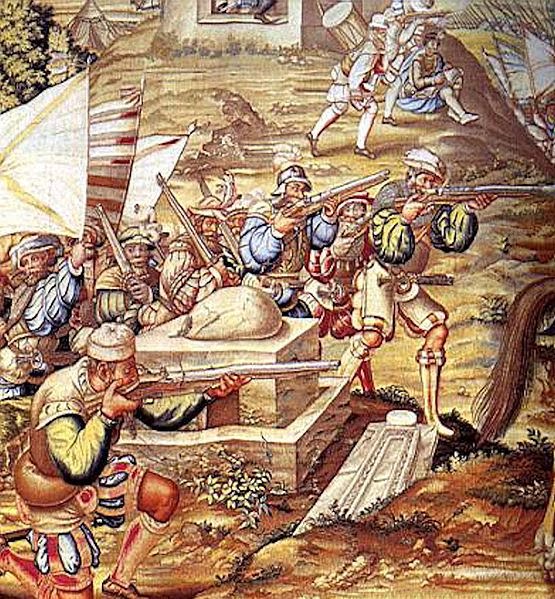
Dr Stillfried started with some technicals on tapestry and the importance of this particular set in their massive size, woven with the best quality colors, best material and by the best weavers.
She then exhibited the main actors: Charles V emperor, Soliman the magnificent, Sultan of the Ottoman empire, Hayreddin Barbarossa, the pirate turned into Pasha and Admiral in control of the Mediterranean sea, Muley Hasan, governor of Tunis defeated by Barbarossa, Jan Cornelisz Vermeyen, artist commissioned to make the most exuberant tapestry with full account of the battle, and some other minor actors.
Vermeyen went to the battle with the troops in june 1535 and recorded scenes in hundreds of drawings none of which have survived. He then drew the real life size cartouch, a template for weavers. These cartouch were used a first time for a set of tapestry in the 16th century on display today in Madrid at the Patrimonio National and the second time in the 18th century for another set on display in Vienna.
Agnes Stillfried went through many details that caught her eye: like women washing on the side of a battle, or why the young page wore an oversized helmet, or the details of the Santa Anna, the largest ship of the century, or ostriches next to the goats, or the fabric and fashion of the moment etc.
Tunis was conquered by Charles V, but Agnes Stillfried gave another historical perspective and reality: Barbarossa was still at large and ruling over the Mediterranean after his loss of Tunis and this battle did not have a significant impact on politics of that time. "It looks like political propaganda." she says. Charles V tried to market himself as extraordinary Emperor, and he succeeded, among other achievements, in leaving an artistic legacy that you should see if given the opportunity.
Subscribe to:
Posts (Atom)
